5th ICEGEE

Industrial Wastewater Sludge-to-Energy: Recovery, Conversion and Environmental Risk


Organizer Submission Deadline Notification of Acceptance Submission Email Download
Central Queensland University June 11, 2027 7-20 workdays sympo_melbourne@icegee.org Manuscript Template

About

Background

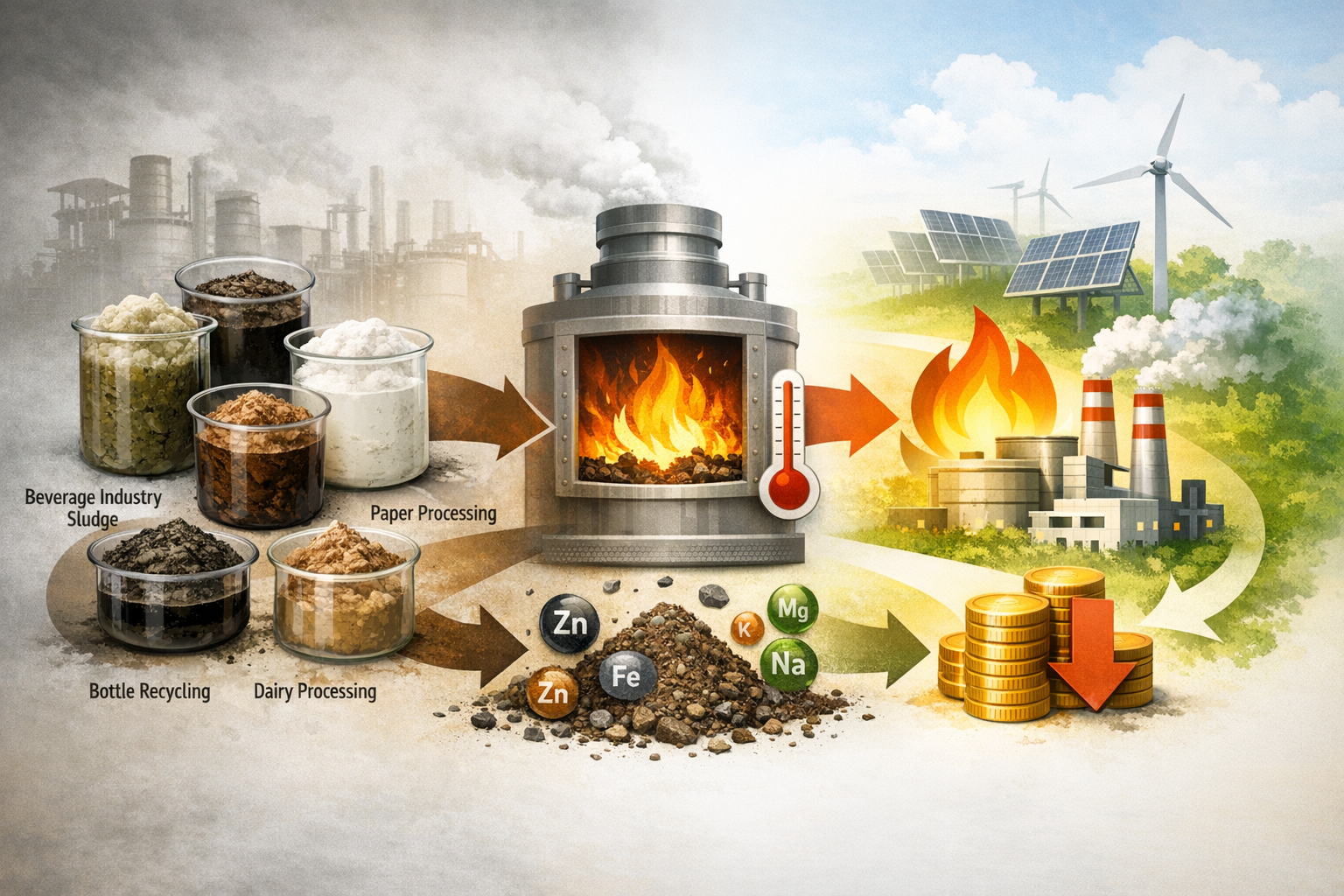
Industrial wastewater treatment generates substantial quantities of sludge that require appropriate management, while conventional disposal options such as landfilling and incineration are becoming increasingly costly and environmentally challenging. Unlike municipal sewage sludge, industrial wastewater sludges can vary considerably in composition depending on the industrial sector and treatment processes involved. These sludges may contain substantial organic fractions and energy-bearing materials, creating opportunities for resource recovery and waste-to-energy applications. However, their high and variable moisture content, ash fraction, thermal characteristics and concentrations of metallic elements can significantly influence their suitability for energy recovery. Recent advances in sludge characterization and thermal conversion technologies provide opportunities to transform these residual streams from disposal liabilities into useful energy resources. The symposium focuses on advancing sustainable approaches for industrial wastewater sludge management through characterization, energy recovery, pollution control and circular-economy strategies. The symposium, which serves as a specialized session of the 5th International Conference on Environmental Geoscience and Earth Ecology (ICEGEE 2027), will focus on environment and energy.

Goal/Rationale

The symposium aims to address the underutilization of industrial wastewater sludge as a potential resource for energy recovery. Current research has focused predominantly on municipal sewage sludge, while sludge generated by specialized industries remains comparatively under-characterized. Limited information on physicochemical properties, calorific value, thermal behaviour and metal content can restrict the development and implementation of appropriate waste-to-energy technologies.

The symposium will bring together researchers and practitioners to examine how improved characterization, pretreatment and process optimization can enhance the feasibility of sludge-to-energy pathways. Particular attention will be given to anaerobic digestion and advanced thermal technologies, including pyrolysis, gasification, combustion and co-combustion. The symposium will also consider the environmental constraints associated with heavy metals, ash and emissions, together with strategies for pollution control and safe residue management. By linking material characterization with energy performance and environmental considerations, the symposium seeks to support more efficient, economically viable and environmentally responsible approaches to industrial sludge management within a circular-economy framework

Scope

Contributions are invited on research, case studies and technological developments addressing industrial wastewater sludge management and resource recovery. Suggested themes include:

  • Characterization of industrial wastewater sludge and sector‑specific sludge properties.
  • Moisture content, total solids, volatile matter, fixed carbon and ash.
  • Calorific value and assessment of sludge as a solid fuel.
  • Thermogravimetric analysis and thermal decomposition behaviour.
  • Anaerobic digestion, biogas production and biological energy recovery.
  • Pyrolysis, gasification, combustion and co‑combustion.
  • Pretreatment, dewatering and drying for improved energy recovery.
  • Heavy metals, ash characteristics and environmental risks.
  • Emission monitoring and air‑pollution control.
  • Techno‑economic and environmental assessment of sludge‑to‑energy systems.
  • Circular‑economy approaches for industrial wastewater sludge.
  • Policy, regulation and strategies for large‑scale implementation.

The symposium particularly welcomes interdisciplinary contributions connecting wastewater treatment, environmental engineering, energy recovery, pollution control and sustainable resource management.

Publication

Accepted papers of the symposium will be published in Theoretical and Natural Science (TNS) (Print ISSN 2753-8818), and will be submitted to Conference Proceedings Citation Index (CPCI), Crossref, CNKI, Portico, Google Scholar and other databases for indexing. The situation may be affected by factors among databases like processing time, workflow, policy, etc.

Publication info

Title: Theoretical and Natural Science (TNS)
Press: EWA Publishing, United Kingdom
ISSN: 2753-8818, 2753-8826 (electronic)

This symposium is organized by ICEGEE 2027 and it will independently proceed the submission and publication process.

* The papers will be exported to production and publication on a regular basis. Early-registered papers are expected to be published online earlier.